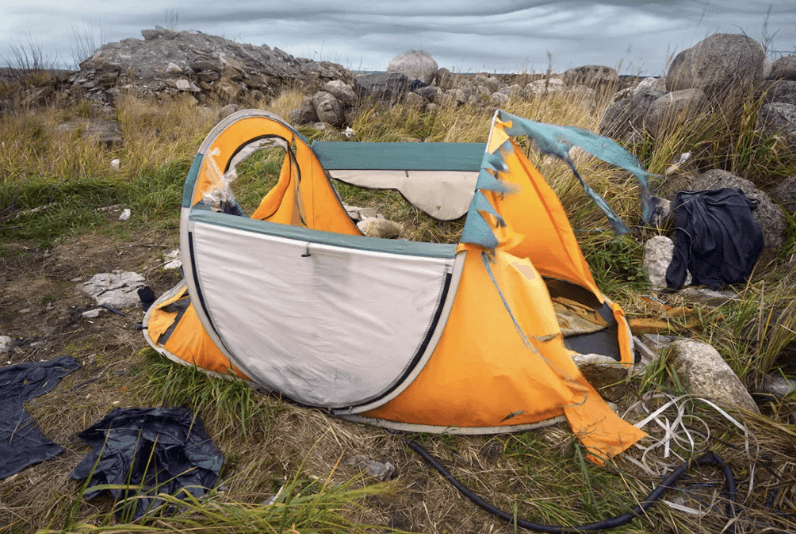
Tent Camping in strong winds can be risky, so be prepared! Here’s what to know and how to manage it for safety and comfort:
Site Selection
Shelter is key. Choose a natural windbreak—behind a ridge, a stand of trees, or a large boulder. Avoid valleys that funnel wind or hilltops that catch the brunt of it.
Avoid ‘widowmakers’. Don’t camp under dead trees or branches that could fall.
Check the prevailing wind direction. In coastal or alpine zones, orient your tent entrance away from the wind.
Tent Setup
Low-profile tents handle wind best. Geodesic and dome tents are more stable than cabin-style tents.
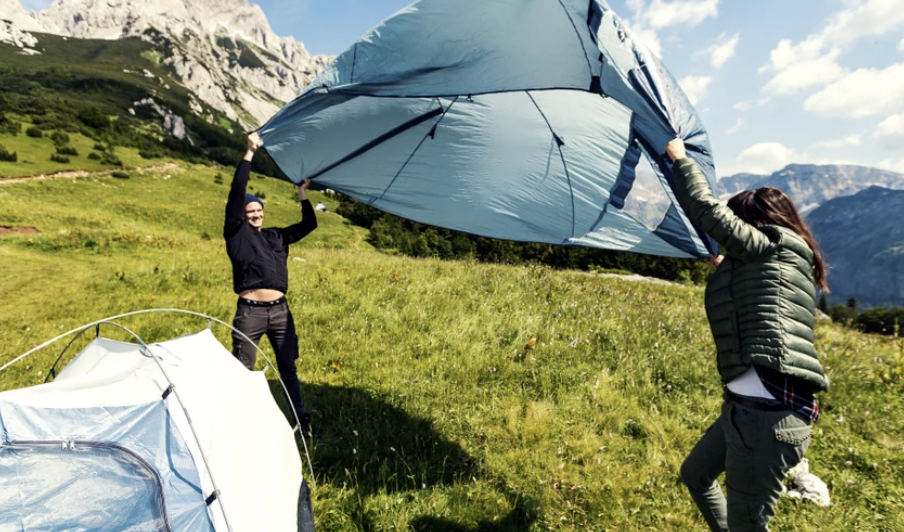
Stake deeply and double up. Use long stakes angled toward the tent, and add guy lines with tensioners to reinforce corners and poles.
Sandbags or rocks can replace stakes in loose soil or sand.
Orient properly. The smallest side should face into the wind; never set your tent broadside to the wind.
Tighten the fabric. Loose flysheets will flap and might tear—cinch them tight to reduce strain.

Adventure.com
Gear & Camp Management
Store gear inside the tent or in heavy duffels to prevent it from blowing away.
Use weight in corners. Sleeping bags, packs, or filled water containers help keep the tent grounded.
Keep a clean camp. Lightweight gear, tarps, and cooking items can become dangerous projectiles. Pack them away between uses.
Cooking & Fire Safety
No open flames in high winds—use a stove with a windscreen or cook in a protected vestibule area.
Avoid sparks. Wind fans embers quickly; skip campfires if gusts exceed 20–25 mph.
Comfort & Safety
Layer up. Winds amplify cold; bring a windproof shell.
Sleep orientation. Sleep with your head on the windward side so the tent fabric doesn’t press against your face.
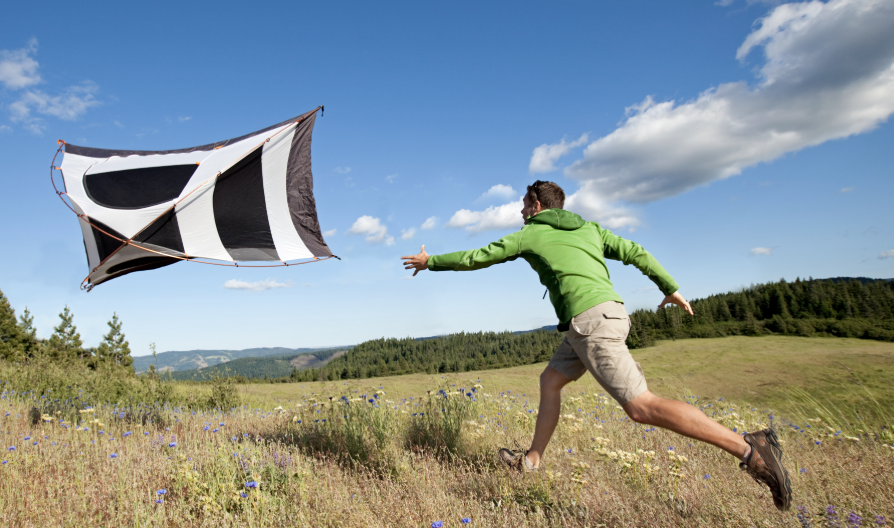
Have an exit plan. If winds exceed 40 mph and your tent starts to collapse or poles bend, it’s safer to retreat to your vehicle or a protected structure.
Wind Rating Guide
Wind Speed | Condition | Effect |
0–15 mph | Mild breeze | Manageable for any tent |
15–30 mph | Moderate gusts | Use extra guy lines; secure gear |
30–45 mph | Strong winds | Only sturdy geodesic tents are recommended |
45+ mph | Severe | Unsafe; seek shelter |
Gear List for Windy Conditions
Tent: Geodesic or tunnel-style, double-wall with full fly
Stakes: 12" aluminum Y-stakes or sand/snow anchors
Guy Lines: Reflective paracord (2–3 mm), 8–12 lines minimum
Poles: Aluminum (stronger than fiberglass) + repair sleeve
Mallet: For driving stakes into rocky ground
Sandbags/Rocks: To weigh down corners and anchor points
Groundsheet: Cut smaller than the tent floor
Windbreak Material: Vehicle or tarp wall (secure low and taut)
Tools: Multitool, wrench, duct tape, and tent pole repair splints
Clothing: Windproof shell, beanie, gloves, and insulated base layers
Lighting: Headlamp with red-light mode to preserve night vision in dust
Tent Orientation Diagram
← Prevailing Wind Direction
┌────────────────────────┐
│ Wind Flow │
└────────────────────────┘
▲
│ Smallest Tent Side (faces wind)
│
↔ Guy Lines at 45° angles ↔
/ \
/ \
●───▭──────────────▭───●
(Tent Door on Leeward Side)
Legend:
● = Stake or Anchor Point
↔ = Guy Line
▭ = Tent Body
How to Use:
The narrow end (smallest profile) of the tent should face the wind.
Guy lines extend at roughly 45° from the tent corners for optimal stability.
Keep the door and vestibule on the leeward (downwind) side to minimize gust entry and flapping.
Pro Tip: Always assume the wind will be stronger than forecast. Test your tent setup at home on a windy day to ensure familiarity with tensioning and staking points.
Adventure.com