





Touring Skis and Downhill Skis
Touring skis and downhill skis are designed for different styles of skiing and offer distinct features to cater to the specific needs of each activity.
The key differences between the two:
Purpose & Use
Touring Skis (aka backcountry skis) are designed for skiing in unmarked or ungroomed areas, for both ascending and descending slopes and for skiing across varying terrain. They’re ideal for backcountry adventures where you often climb uphill before skiing down.

Downhill Skis (aka alpine skis) are designed specifically for downhill skiing on groomed trails at ski resorts. These skis prioritize stability and speed on descents and are not intended for uphill travel.

Design and Construction
Weight: touring skis are designed for backcountry travel and are typically lighter, narrower, and often more flexible than downhill skis. The lighter weight reduces fatigue during long ascents and provides better floatation in deep snow. Downhill skis, on the other hand, are designed for speed and stability on groomed slopes and are typically wider, stiffer and heavier.
Bindings: touring skis use lightweight bindings that allow the heel to lift while climbing (similar to cross-country skiing) and lock down to provide support and control for downhill descents. Downhill skis have fixed, more robust bindings that keep the heel in place at all times. They’re designed for speed and provide better control and stability on descents.
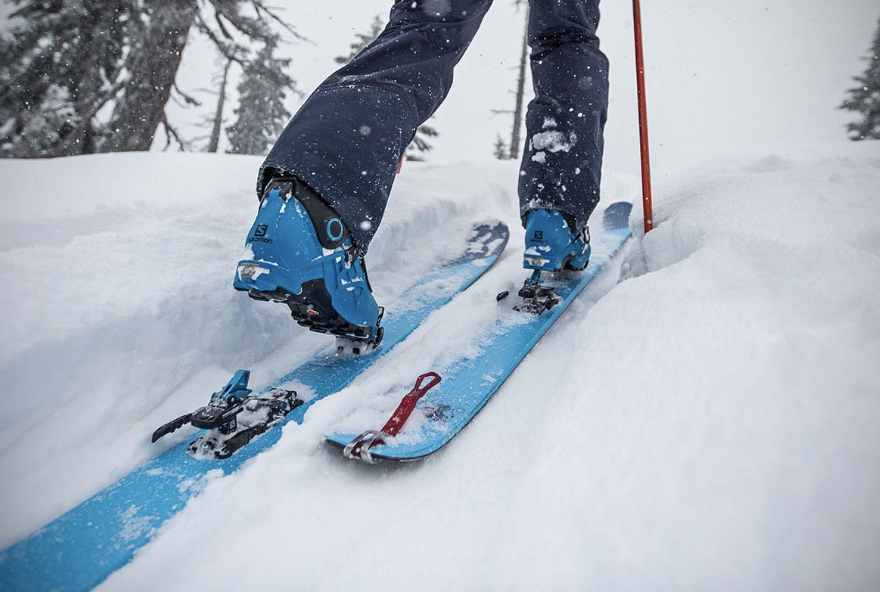
Flexibility: touring skis often have a softer flex to improve maneuverability on uneven terrain and provide better performance in variable snow conditions, whereas downhill skis have a stiffer flex for better stability and edge control at high speeds.
Ski Shape and Profile
Camber and Rocker*: touring skis typically feature a more pronounced rocker (upward curve at the tip and tail) to help with flotation in powder and easier turning in deep snow. Downhill skis often have a traditional camber (arch underfoot) for better edge grip and carving power on hard-packed snow.
*Note: Rocker and Camber describe the curve of a ski when viewed from the side. Rocker skis have a midsection that rests unweighted on the snow with tips & tails that curve up. Camber skis have a midsection that arches off the snow slightly when unweighted.
Additional Features
Climbing Skins: touring skis are equipped with climbing skins (strips attached to the bottom of the skis) that provide grip for uphill travel. Downhill skis do not have this feature.

Durability: Downhill skis are built to withstand the rigors of resort skiing, including impacts from hard snow and icy conditions. Touring skis need to balance durability with lightweight construction, making them less robust compared to downhill skis.
So touring skis are optimized for backcountry adventures, with features that facilitate both climbing and descending in various snow conditions and downhill skis are designed for performance and stability on groomed resort trails, focusing solely on descending.
The choice between the two, or the addition of one to your collection, will depend on where you plan to enjoy the snow!