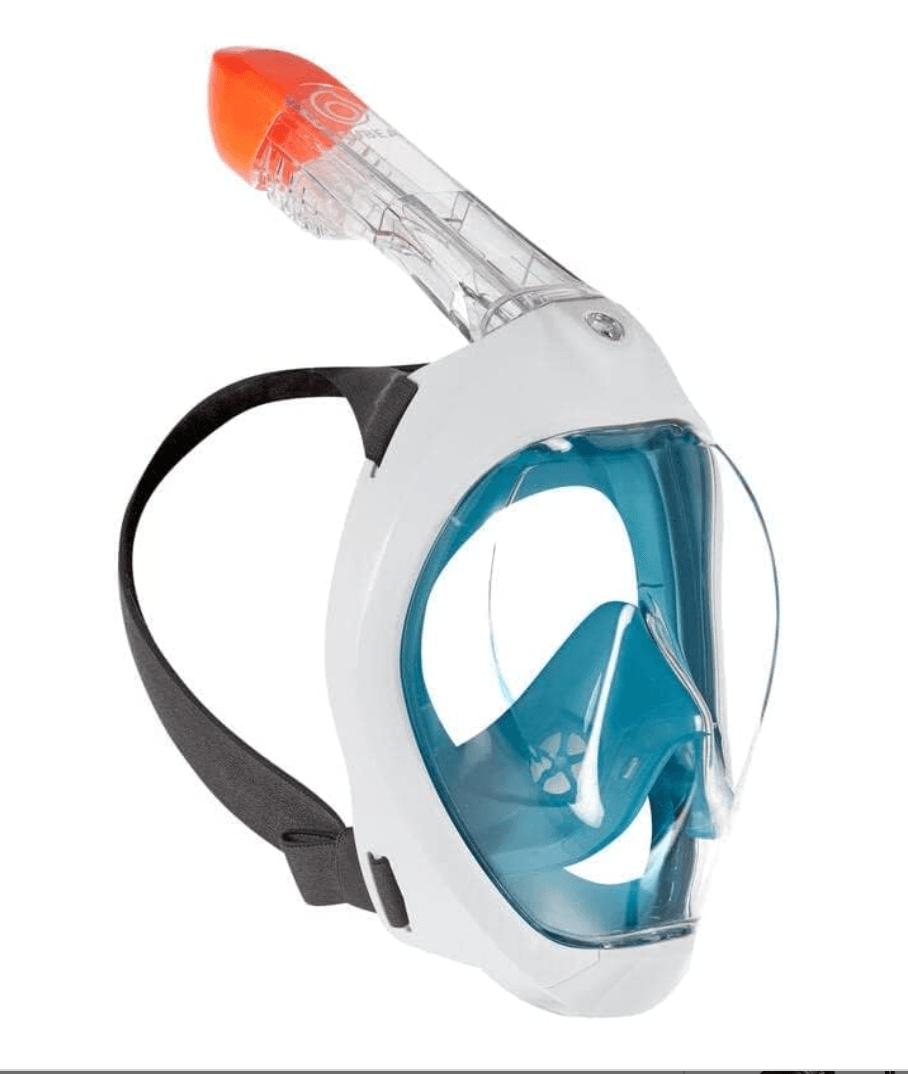
Traditional Snorkeling Mask vs. Full-Face Snorkeling Mask
Snorkeling is one of the best ways to explore the underwater world without requiring scuba certification. Choosing the right mask is crucial for comfort, visibility, and ease of breathing.
Here’s a detailed comparison of traditional snorkeling masks vs. full-face snorkeling masks to help you decide which is right for you.
Traditional Snorkeling Mask (Half-Face Mask)
This is the classic and widely used piece of snorkeling equipment. It covers the eyes and nose with a separate snorkel for breathing through the mouth.

Key Features:
Mask Design: Covers the eyes and nose while using a separate snorkel tube for breathing.
Material:
Skirt: Usually made of high-quality silicone for a watertight seal and comfort.
Lens: Typically tempered glass for durability and clarity.
Lens Configuration: Single-lens masks offer a wider, more open field of view. Dual-lens masks have a lower internal volume, making it easier to clear water.
Nose Pocket: Allows for easy equalization when diving deeper by pinching the nose.
Strap & Buckle System: Adjustable silicone straps secure the mask in place.
Purge Valve (Optional): Some masks feature a purge valve at the nose pocket for easy clearing of water.
Separate Snorkel:
Classic J-style – basic tube design, requires clearing if water enters.
Semi-dry – has a splash guard to reduce water entry.
Dry-top – has a valve that seals when submerged to keep water out.
Compact & Versatile: Suitable for snorkeling, freediving, and spearfishing.
Compact & Versatile: Suitable for snorkeling, freediving, and spearfishing.

Considerations:
You’ll need to learn proper breathing techniques through a snorkel.
Water can enter the snorkel if using a basic J-style snorkel.
Potential fogging of the mask if not treated with anti-fog spray or defogging solutions.
Water can enter the snorkel if using a basic J-style snorkel.
Potential fogging of the mask if not treated with anti-fog spray or defogging solutions.
Maintenance Tips:
Rinse with fresh water after use to remove salt and debris.
Store in a cool, dry place to prevent degradation of the silicone skirt.
Use anti-fog treatment for a clearer view.

Full-Face Snorkeling Mask (Easybreath Mask)
A full-face mask is a newer innovation designed to make snorkeling more comfortable and natural by allowing users to breathe through their nose and mouth.

Key Features:
Full-Face Design: Covers the entire face, eliminating the need for a separate snorkel.
Natural Breathing: Allows breathing through both the nose and mouth, making it easier for beginners.
Panoramic View: a wide, curved lens offers a 180-degree field of vision. No frame obstruction, making the underwater experience more immersive.
Dry-Top System: A built-in dry valve prevents water from entering the breathing tube.
Anti-Fog Technology: a dual airflow system keeps exhaled air separate from the viewing area. Reduces fogging compared to traditional masks.
Adjustable Straps: Ensures a comfortable, watertight fit.
Sizes & Colors: Available in multiple sizes to fit different face shapes, with various color options.
Travel-Friendly: No separate snorkel to carry, making packing easier.
Considerations:
CO2 Buildup Risk – Some masks may not properly vent exhaled carbon dioxide (CO2), leading to dizziness or shortness of breath. Always choose a high-quality, tested model.
Not Suitable for Freediving – Increased buoyancy makes it difficult to dive below the surface.
Harder to Clear Water – If water enters the mask, it's more difficult to drain than a traditional mask.
Fit is Crucial – An improper fit can lead to leaks or discomfort.
Not Suitable for Freediving – Increased buoyancy makes it difficult to dive below the surface.
Harder to Clear Water – If water enters the mask, it's more difficult to drain than a traditional mask.
Fit is Crucial – An improper fit can lead to leaks or discomfort.
Maintenance Tips:
Rinse thoroughly after use to prevent sand and salt buildup in the dry-top valve.
Store in a cool, dry place to maintain the silicone seal.
Check for cracks or leaks before each use.

Which Snorkeling Mask is Right for You?
Feature | Traditional Snorkeling Mask | Full-Face Snorkeling Mask |
Breathing Method | Mouth (via snorkel) | Natural (nose & mouth) |
Field of View | Standard (single or dual lens) | Panoramic 180° view |
Anti-Fog System | Requires treatment | Built-in dual airflow |
Water Entry Prevention | Dry-top snorkel (if included) | Dry valve system |
Ease of Clearing Water | Easier (nose pocket purge valve) | Harder (entire mask must be removed) |
Best For | Versatile use: snorkeling, freediving, spearfishing | Relaxed snorkeling at surface level |
CO2 Risk | None | Possible (with poor ventilation) |
Weight & Bulkiness | Lightweight, compact | Larger, bulkier |
Ease of Use | Requires practice with snorkel | Easier for beginners |
Choose a Traditional Snorkeling Mask if:
You want a versatile mask that can be used for snorkeling, freediving, and spearfishing.
You don’t mind learning to use a snorkel properly.
You prefer a compact and lightweight setup.
You want a mask with easy water clearing and no CO2 risk.
You want a versatile mask that can be used for snorkeling, freediving, and spearfishing.
You don’t mind learning to use a snorkel properly.
You prefer a compact and lightweight setup.
You want a mask with easy water clearing and no CO2 risk.
Choose a Full-Face Snorkeling Mask if:
You want a more natural breathing experience through both nose and mouth.
You don’t plan to dive below the surface (best for surface-level snorkeling).
You prefer a panoramic 180° view with a built-in anti-fog system.
You’re a beginner looking for ease and comfort.
You want a more natural breathing experience through both nose and mouth.
You don’t plan to dive below the surface (best for surface-level snorkeling).
You prefer a panoramic 180° view with a built-in anti-fog system.
You’re a beginner looking for ease and comfort.
Whichever mask you choose, always prioritize safety!